Intl’ Women’s Day Film Screening

“A View From a Grain of Sand”
Special Screening for International Women’s Day on March 10, 2007 at 11 am at the Laemmle One Colorado Theater, Pasadena

Combining verite footage, interviews and archival material, Los Angeles based film maker, Meena Nanji has fashioned a harrowing, thought-provoking, yet intimate portrait of the plight of Afghan women in the last 30 years —from the rule of King Mohammed Zahir Shah to the current Hamid Karzai government to the activist work of RAWA, the Revolutionary Association of the Women of Afghanistan. Over a period of five years, she spent months in a refugee camp in Pakistan, where she documented the efforts of three women to rebuild their lives and help others in the process: Shapire, a teacher; Roeena, a physician; and Wajeeha, a social activist.

There will be a special screening of A View From a Grain of Sand to commemorate International Women’s Day on Saturday March 10th at 11 am, at the Laemmle One Colorado Theater in Pasadena, 42 Miller Alley, Old Pasadena, 91103.

Tickets are $10 each and will be available at the theater box office starting February 10th through March 10th. Or make a reservation via phone at (323)632-5558. Seating is limited so please make a purchase or reservation to ensure a seat. All proceeds will benefit RAWA.

2001 saw an unprecedented level of international interest in the lives of Afghan women living under the Taliban. Since then however, the media spotlight on Afghan women has fallen, and with it, public knowledge of the current situation Afghan women face. In the last few weeks however, the social and political crisis in Afghanistan is back in the front pages, making Nanji’s film especially timely and poignant.

View From A Grain of Sand reveals how Afghani women have had their rights stripped from them over the last 25 years – and their ongoing battle to (re)gain the most basic human rights. Nanji shot the film over a period of three years in the sprawling refugee camps of northwestern Pakistan and in the war-torn city of Kabul. Through a two-year long process of editing, additional shooting and archival research, she worked to locate the personal stories of the women she met within the larger context of international interference and war in the Middle East and the rise of religious fundamentalists in Afghanistan. Going beyond the surface of sensational news to explore the mechanisms of oppression, View from A Grain of Sand is political documentary at its best.

The main characters whose lives are depicted in View From A Grain of Sand are Wajeeha, Roeena and Shapire. Born in the rural province of Farah, Afghanistan, Wajeeha was, like her sisters, prevented from attending school. When the Soviets invaded Afghanistan, she fled to Iran, where she met her husband – a resistance fighter who was eventually killed in a Soviet ambush in the late 1980s, as Wajeeha was expecting her youngest son. Traveling to Pakistan, she stumbled on a demonstration by the Revolutionary Association of the Women of Afghanistan (RAWA) and decided to join them. They taught her how to read and write, and she is now teaching literacy courses to other women, raising awareness and struggling to make women’s rights a reality in Afghanistan.

Roeena was raised in Kabul and worked as a doctor there for three years before fleeing to Pakistan with her family in 1994 after her younger brother was killed by a random rocket attack. She has since worked for the International Medical Corps, aiding thousands in refugee camps. Shapire fled the Taliban in 1998 with her husband and five young children. As a young girl in Afghanistan, she had aspired to be a pilot or a journalist, but her ambitions were thwarted by her arranged marriage at the age of sixteen. Now she works as a teacher in a girls’ school founded by refugees in Pakistan.

For more information on RAWA: rawa.org Contact information about View from a Grain of Sand: viewgrainofsand.com.

About the Filmmaker

Born in Kenya in an East Asian family, Meena Nanji grew up in London, England, and then Los Angeles, where she received a BA in Political Sciences from UCLA (1985) and a MFA from CalArts (1993). Since then, she has completed a number of experimental and political documentaries that have been screened in international film/video festivals as well as broadcast on PBS stations throughout the US and on European television. She now lives and works between Los Angeles and New Delhi.

She has received grants and awards from the Rockefeller Foundation (2006, 1995), Women in Film Foundation (2006), the Durfee Foundation (2006), Center for Asian American Media (2006, 2004, 1994), the National Endowment for the Arts (2004), Pacific Pioneer Fund (2004), Los Angeles Cultural Affairs Department (2001), Paul Robeson Fund (1995) and the American Film Institute (1995), among others.

Selected Filmography: Voices of the Morning (1992)
It’s a Crime (1996)
Looking for Another Girl (1998)
Living in Color (2002)

Posted in AWM News | Comments Off on Intl’ Women’s Day Film Screening

2nd Annual Fair Trade Crafts Fair

Holiday Gifts with a Conscience!
Saturday December 9th, 11am – 4pm
Echo Park Methodist Church, 1226 N. Alvarado St. Los Angeles, CA

Browse through a large selection of affordable, sweat-shop free crafts made by artisans internationally and locally including embroidered pillow-covers, wallets and purses from Afghanistan, locally made silver jewelry, blankets, scarves and tote-bags, as well as organic fair trade coffee, tea and chocolates, and much more!

There will be refreshments all day long!

All proceeds will directly benefit the artists and workers who made the items.

Call (323) 788-3171 for more information. Organized by RAWA Supporters of Southern California & Afghan Women’s Mission.

Posted in AWM News | Comments Off on 2nd Annual Fair Trade Crafts Fair

‘We are just watching things get worse’

Published in The Guardian

by Natasha Walter | Tuesday November 28, 2006

Five years ago, when the US and the British arrived in Afghanistan, they sold their mission to us not simply as a way of driving out the terrorist-shielding Taliban, but also as a way of empowering women. As Cherie Blair said in November 2001: “We need to help Afghan women free their spirit and give them their voice back, so they can create the better Afghanistan we all want to see.” Or as George Bush boasted in December 2001: “Women now come out of their homes from house arrest.”

Five years on, however, the Blairs and the Bushes have become less vocal about the women whom we were meant to have liberated. Bush has not commented on the fact that the majority of girls in Afghanistan still cannot go to school. When Tony Blair visited Kabul earlier this month, he did not comment on the recent report by one charity, Womankind Worldwide, which stated: “It cannot be said that the status of Afghan women has changed significantly in the last five years.”

I went to Afghanistan soon after the Taliban had been ousted from Kabul, and found that their departure was genuinely allowing women to hope again – even in places where you might have thought all hope would have died. I remember interviewing women in the very first post-Taliban Loya jirga (grand assembly), who said: “The doors of everything have been closed to women for so long. Now we hope the doors are swinging open.”

One of the places that stuck most clearly in my mind was a dirt-poor village called Sar Asia, on the outskirts of Kabul. There I met women who had been unable to leave their houses for education during the Taliban regime, who had just set up a literacy course with the help of Rawa, the Revolutionary Association of Women of Afghanistan. When I asked the students, who ranged from 13-year-old girls to 50-year-old widows, if they thought all women in Afghanistan wanted more freedom and equality, my translator struggled to keep up with the clamour: “Of course we do,” said one widow furiously. “Even women who are not allowed to come to this class want that. But our husbands and brothers and fathers don’t want it. The mullahs keep saying freedom is not good for us.”

Over the past few years, as news from Afghanistan has become less positive, I have been wondering what had happened to these women. Last month I was able to revisit the country, and one of the first things I did was to go back to Sar Asia. The teacher invited me back into the room that once had been crowded with women learning to read.

This time, the room is empty, its net curtains closed against the bright sun. “We’re not teaching here any more,” the teacher – I’ll call her Alya, because she has asked me not to use her real name now – tells me sadly, sitting alone on the cushions on the floor. “They were threatening us, telling us not to do it any more, and we were scared. For a while we continued, but we were afraid that they might do something worse. This place is a place of Taliban. Neighbours may work for the government in the morning but at night they are the same Taliban with the same thoughts.” I tell her I remember the enthusiasm of the women in the course four years ago. “Yes, we were very happy. Rawa members came and talked about how they could help us to make a literacy course for women. We were all very pleased. But that has stopped now. I think in the west you think that now conditions are good here, that everyone can go to school or go to work for the government. But now we are just watching things get worse.”

Alya, who lost her husband and one of her sons during the fighting in Kabul in the 90s, tells me that fewer than half of the girls in the village go to school now. She has managed to find work as a teacher in a government school in Kabul, but hopes that the men in her village don’t know that this is what she does. She always wears the burka when she goes out. “We have heard that if somebody kills a male teacher he will get 20,000 Afghanis, but if someone kills a female teacher he will get 50,000 Afghanis,” she says. “We don’t know if that is true or not, but it makes us very scared.”

As I leave Alya’s house, she asks me to hide my bag under my coat in case the men in the village see it and think I have a camera in it (which might reveal that she was speaking to a western journalist). I feel immensely depressed.

You can’t say that things haven’t improved at all in Afghanistan since the Taliban were “removed”, and even Alya wouldn’t quite go that far. You can now see women moving around Kabul in a way they could not five years ago; the majority do not wear the burka, sporting instead a variety of Islamic dress from shalwar kameez to a short coat with a bright headscarf, as they go to the markets, to the schools, to the university, and to work.

During my time in the city I seek out evidence of change, and I certainly find it. I meet women in the government, including in the ministry of public health, where they are trying to deliver a package of basic healthcare for women. I meet women in non-governmental organisations working on literacy and advocacy projects, women professors and students in the university, and women in the media, including newspaper reporters and television presenters. But each of them has a negative to set beside the positive.

Farzana Samimi, for instance, a television presenter who anchors a weekly programme on women’s issues, is the target of constant threats. “It’s not for me I’m scared, but for my children – if anything happened to them,” she tells me when we meet at the television studio just after her programme. “The situation here has not changed as much as we wanted it to change, and in the last year I have become more afraid. I would like to broadcast political programmes, but I cannot because of the insecurity. It would be too dangerous.”

The situation in Kabul, however – which has a tradition of women’s education and employment – is inevitably far better than in the rest of the country, however. Human Rights Watch says that a third of districts in Afghanistan are now without girls’ schools, due to attacks on teachers and students by the Taliban and other anti-government elements; and traditional practices such as child marriage and baad, in which women are exchanged like objects in tribal disputes, still continue unchallenged. “Every day women are sacrificed for their family or tribe,” Nilab Mobarez, a 45-year-old doctor who stood recently as a vice-presidential candidate, tells me angrily. “We still do not have the judicial system to resolve this.” Women who stand up against oppressive traditions are vulnerable; the number of assassinations and threats against women working for the government and international organisations is rising. Even in Kabul many women I meet are talking about not only how change is more elusive than they hoped, but even how things now seem to be moving in the wrong direction.

Malalai Joya is, at 28 years old, the youngest and most famous of all the women in the Afghan parliament. In a way her very presence in the parliament is a powerful symbol of change; a woman who had to work in secret in underground schools in Herat during the Taliban time is now able to speak out against her enemies in the parliament. She rose to fame at the end of 2003, when she made a speech attacking the warlords who still hold the balance of power in Afghanistan. On that occasion, one of the men she was attacking, Abdul Rasul Sayyaf, rose and told her that her speech was a crime, announced that “Jihad is the basis of this nation” and asked for her microphone to be disconnected. The then speaker of the house, Sibghatullah Mojaddedi, a former mujahideen leader, called her an infidel, and said that if she did not apologise she could not attend the next session of parliament.

Since her historic speech, Joya has survived assassination attempts and constant denunciations. Even meeting Joya is difficult; the night before I leave, her sister calls to ask me to drive to the front of the parliament building, where she sends a car to meet my car, and we travel through the darkness of Kabul’s night streets in looping circles, to arrive eventually at a house where men with guns wave us quickly inside. The house feels cold and unlived in. “I have only just moved here,” Joya says. “I have to keep changing my house. I hate guns, but I have to have men with guns guarding me all the time. One day they will kill me. They kill women who struggle against them.” Although Joya hated wearing the burka during the Taliban years, she is still not able to take it off. “I wore it today,” she tells me, “while I was travelling, because I am not safe.” Joya is a beautiful young woman, with wide dark eyes, simply dressed in a black wrap and long dress. When she isn’t speaking she looks calm and poised, but when she speaks she is on fire, raging about the situation for herself and her country.

“Here there is no democracy, no security, no women’s rights,” she says. “When I speak in parliament they threaten me. In May they beat me by throwing bottles of water at me and they shouted, ‘Take her and rape her.’ These men who are in power, never have they apologised for their crimes that they committed in the wars, and now, with the support of the US, they continue with their crimes in a different way. That is why there is no fundamental change in the situation of women.”

Joya talks like this to me, furiously, for more than an hour, almost weeping as she catalogues the crimes against women that still keep them in a state of fear: from Safia Ama Jan, the leading women’s rights campaigner assassinated in Kandahar earlier this year, to Nadia Anjuman, a poet murdered in Herat last year; from Amina, a married woman who was stoned to death in Badakhshan in 2005, to Sanobar, an 11-year-old girl who was raped and exchanged for a dog in a reported dispute among warlords in Kunduz in northern Afghanistan last month.

She is desperate for people to take account of the silent women whose voices we never hear. “Afghan women are killing themselves now,” she says, “there is no liberation for them.” This is not just rhetoric: the Afghan Human Rights Commission recently began to document the numbers of Afghan women who are burning themselves to death because they cannot escape abuse in their families.

I visit an organisation called Humanitarian Assistance for the Women and Children of Afghanistan (HAWCA), whose director, Orzala Ashraf, is a driven young Afghan woman. “It is 99% tragedy here, but there are always stories of hope,” she says. To illustrate that, she begins to tell me a story of a woman whom I’ll call Jamila. She ran away from home, in a traditional community near Kandahar, four years ago when she was 15, because she was being forced into marriage with an elderly man. “Her family are Taliban,” says Orzala. “I don’t mean that they are political fanatics, I mean that they are traditionalists who are against women’s freedom – they had already killed an aunt who wouldn’t marry according to their wishes.” Jamila dressed as a young man and came in a smugglers’ car to Kabul, but when she got to Kabul she was arrested and taken to prison – and although she was guilty of no crime, she spent a year in jail. But then Jamila got lucky; HAWCA brought her to the women’s refuge it had just set up, where she learned to read and grew in confidence.

In the past there would have been no way for Jamila to survive in Afghan society without her family, but Orzala Ashraf eventually suggested to her that she could try a brand new route – the women’s police force. And that is where she is now. A few days later I go to visit Jamila at the new female police academy, which is set on the hills to the west of Kabul. She works there in the administrative office, wearing a uniform of khaki pants and jacket. “Once I was illiterate and I didn’t know about anything,” she says quietly but decisively, “but I was one of the lucky ones – I began to learn. Now I know that Islam gives rights to women as well as to men.”

The principal of the women’s police academy, Homera Dakik , a tall 25-year-old woman wearing an elegant leopard-print scarf over her khaki-coloured uniform, is also eager to talk to us. She was forced into marriage 10 years ago with the head of the Taliban secret services. “My father said no, but they kidnapped me. I spent four years in his family’s house. I experienced terrible mental torture.” After the Taliban fell, her father managed to get her away and brought her home. “It is really my dream now,” she says, sitting in her office with Jamila, “that we should be able to tell the world how such criminal things have happened to the women of Afghanistan. Once I thought it was only me who had suffered like this, but now I know that the majority of women in this country have known situations like this.”

She and Jamila show us round the academy, which is like a palace compared with the rest of Kabul – it has dormitories, kitchens, lecture theatre, even a kindergarten, all spanking new, clean and lovely, built with money from international donors. But it is empty. How many trainees can this place hold, I ask? 200. How many do they currently have? Four. “Families will still not let their women join the academy,” Homera says sadly. “They don’t see it as honourable.” Whenever they go out, Homera and Jamila hide their uniforms under abayas (cloaks), so that they won’t be attacked. Homera is not sure that things will get any better. “For three years after the fall of the Taliban I was happy. Personally, as long as I have blood in my body, I will fight for my rights. But now we have great fear in our hearts that things are not going in the right direction.”

The empty academy, fronted by these brave young women, is a powerful symbol of the fragility of Hamid Karzai’s government. Although Karzai may speak in favour of women’s rights, he does not have the reach and resources to deliver on his rhetoric. His alliances with warlords whose record is little better than the Taliban’s and his inability to give any real power to the women in the government have made women leaders sceptical of his commitment to their rights. Alongside that scepticism goes women’s disappointment about the promised rebuilding of the country. In order to get grounded in popular support, the government needed to rebuild everything from healthcare to roads in this devastated country. To do so it looked to the international community to help. Five years ago Bush and Blair were quick with promises. But the consensus now is that those promises have not been matched by action.

Everywhere I go, from the offices of big international organisations such as Oxfam, to government ministries, to little Afghan organisations, I hear anger and frustration. Anger at promised money that never arrived, even from blue-chip donors such as the World Bank. Anger at unaccountable donors who set up useful projects, but decided to move on after six months, leaving workers penniless and floundering. Anger at US aid that was tied to using US contractors with little knowledge of the country, so that, say, a vital health clinic in Badakhshan was built in a region where it would only be accessible by helicopter during the winter months. Anger at poor central planning and lack of transparency in the government.

These failures of development mean that people still do not have the clinics, schools, clean water and roads that they need to start rebuilding civil society after decades of war. Even in Kabul most areas are still desperately poor, with no functioning sewage system and just a few hours of electricity a night. But in one area of the city is an unexpected string of half a dozen brand-new wedding halls, each three or four storeys high. These have their own generators, and night after night, against the pitch black of the unpowered city, their neon lights blaze out as hundreds of Afghans turn up to dance and feast.

The men and women sit separately here, and at the wedding celebration that Dr Nilab Mobarez takes me to, I watch women in the kind of outfits that would not look out of place in an 80s nightclub – sequined and spangly, full-length and fabulous, accessorised with pearlised makeup, platform sandals and bouffant hairdos – dancing to a band that jazzes up their traditional songs. Among the silver painted pillars and electric chandeliers I talk to bright-eyed, confident women, from Dr Malika Popal, who works at the ministry of public health where she is helping to deliver a basic package of healthcare aimed at bringing down the rate of maternal mortality, and her daughter Kausar, a tall and ambitious 20 year old currently studying at the university. “My dreams are complicated,” Kausar says. “I want to go and study in America. I know I don’t want just to get married.” But even here you cannot escape the other side of women’s lives in Afghanistan.

At one table, I meet Kochai, a serious woman more soberly dressed than the others in a long olive skirt and jacket. She has come to Kabul for the wedding from Kandahar, where she works as a police woman in the airport. She was married into a traditional family, and was abused for years by her husband. It was when her daughter then got married to a relation of her husband’s, and started being beaten too, that she decided she had to get herself and her daughter away from these violent men. “I had to defend myself and my daughter,” she said. The women now live without their husbands, although her daughter has not been able to get a divorce from her husband. “It is very, very difficult. I am sick of being frightened. During the nights especially I am frightened.”

Like all the other women I meet on my trip, Kochai is very sure that despite all the insecurity and lack of progress, life would be far worse if western forces pulled out. “If the British and American soldiers left now, we wouldn’t be able to leave our houses. We would lose all that we have.”

Yet everyone knows that the Taliban are regrouping in and around Kandahar; Safia Ama Jan, the head of the department of women’s affairs, was assassinated there recently, and Kochai says the actual number of kidnappings and assassinations is far higher than we hear about. “In one week six women were killed. They were ordinary women, working women, but the Taliban say they are spies of the government. They tell them, ‘Don’t work,’ and if they do not listen, then they are kidnapped and killed far from the city.” She has two bodyguards who take her to work and back, but after work she has no bodyguards – so in a way they only make her more of a target. “I wear the burka, and I change the colour of it regularly so that I hope nobody knows it is me under it. The morale of women in Kandahar is getting worse every day,” she says.

When I express my horror, Nilab Mobarez looks at me rather pityingly and says: “This is only one case among so many. So many Afghan women suffer like this.”

Guardian Unlimited Copyright Guardian News and Media

Limited 2006

Read the original article here.
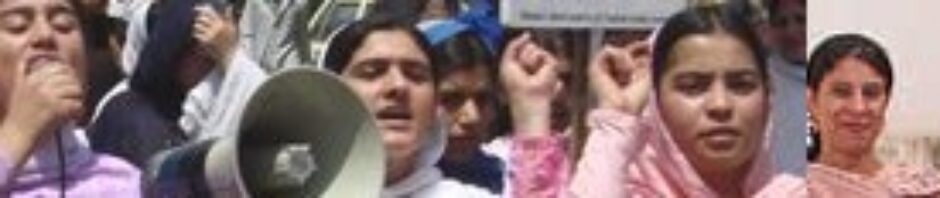
Posted in Afghanistan News Wire | Comments Off on ‘We are just watching things get worse’

NPR Interviews RAWA Member

NPR Anchor Lisa Mullins speaks with an Afghan woman who goes by the name of Zoya. Zoya travels the world to speak on behalf of the Revolutionary Association of the Women of Afghanistan. Zoya’s life has been marked by the violence that has plagued Afghanistan since the Soviet troops invaded her country in 1979 and the Taliban regime took hold.

Click here to listen to the interview.

Posted in Afghanistan News Wire | Comments Off on NPR Interviews RAWA Member

Afghanistan Like a Ticking Bomb, says Women’s Rights Activist on 5th Anniversary of US Bombing

FOR IMMEDIATE RELEASE

CONTACT
Voice: 626-676-7884
E-mail: info_at_afghanwomensmission.org

“AFGHANISTAN LIKE A TICKING BOMB,” SAYS WOMEN’S RIGHTS ACTIVIST ON 5TH ANNIVERSARY OF US BOMBING.

“Today Afghanistan is still chained and burning in the fires of both the Taliban and the criminal ‘Northern Alliance’ fundamentalists and the future of Afghanistan is in serious jeopardy,” warned Zoya, a member of RAWA (Revolutionary Association of the Women of Afghanistan) five years after the start of Operation Enduring Freedom.

Founded in 1977, RAWA is the oldest social and political organization of women in Afghanistan, struggling for a secular democracy through non-violent resistance. The underground women’s organization has been the most vocal critic of fundamentalism and war.

According to Zoya, the US “just replaced one fundamentalist regime with another,” and Afghan president Hamid Karzai “betrayed the people’s trust by relying on warlords…The security situation is critical – it is like a ticking bomb.”

Afghanistan has seen a dramatic upsurge in violence in the past two years. Attacks on US and NATO forces are on the rise and the rate of troop fatalities is comparable to Iraq. Suicide bombings, a one-time rare phenomenon, have reached epidemic proportions. Taliban forces control the southern part of the country, while the Northern Alliance, allied with the US to help topple the Taliban in 2001, now control the Northern Afghan provinces. Recently, Safia Amajan, the head of a provincial women\’s affairs department was gunned down outside her home.

RAWA gained international attention in the immediate aftermath of 9/11 for their courage in exposing the crimes of the Taliban. However, RAWA warned the US not to work with the Northern Alliance in October 2001. Today because of the climate of fear created by the fundamentalists, RAWA members continue to risk their lives for speaking out. Zoya, like all RAWA members, uses a false name and travels incognito.

On October 7, 2006, Zoya spoke at a benefit for RAWA, organized by Afghan Women’s Mission called “Breaking the Propaganda of Silence.” On October 7, 2006, Zoya spoke at a benefit for RAWA, organized by Afghan Women’s Mission called “Breaking the Propaganda of Silence.” Click here to read the transcript of her speech.

Zoya is available for interviews during her two week US tour. Call 626-676-7884 to schedule interviews.

Posted in Press Releases | Comments Off on Afghanistan Like a Ticking Bomb, says Women’s Rights Activist on 5th Anniversary of US Bombing

Report of RAWA Benefit with Zoya, Eve Ensler, Michelle Shocked, Mimi Kennedy, and Sonali Kolhatkar

October 7th 2006 marked the 5th anniversary of the start of Operation Enduring Freedom. AWM organized a major benefit event for RAWA at Cinespace in Hollywood on Saturday October 7th with special guests Eve Ensler (“Vagina Monologues”, V-day), recording artist Michelle Shocked, actor and activist, Mimi Kennedy & Zoya (RAWA). Plus exclusive a sneak film preview of “A View from a Grain of Sand” by Meena Nanji. The event was hosted by Sonali Kolhatkar (KPFK, AWM).

Click here for an announcement of the event.

Download audio files of the event:

Photographs from Breaking the Propaganda of Silence

by Brian Biery (www.brianbiery.com)

Eve Ensler speaking about Afghanistan, RAWA, and her new book, Insecure at Last.
Eve Ensler speaking about Afghanistan, RAWA, and her new book, “Insecure at Last”.
Eve Ensler reading from her new book, “Insecure at Last”.
Eve Ensler reading from her new book, Insecure at Last.
RAWA member Zoya meeting guests attending the event (for security purposes, RAWA members do not reveal their identities).
RAWA member Zoya being interviewed (for security purposes, RAWA members do not reveal their identities).
Actor and activist Mimi Kennedy speaking about Afghanistan and introducing Eve Ensler.
Acclaimed singer Michelle Shocked performing several songs.
Sonali Kolhatkar and James Ingalls, co-Directors of Afghan Women’s Mission with Michelle Shocked.
Mimi Kennedy with film maker Patricia Foulkrod and a guest.
AWM Co-Director Sonali Kolhatkar hosted the event.
AWM Co-Director, Sonali Kolhatkar reading from her new book with James Ingalls, “Bleeding Afghanistan.”
AWM Co-Director, Sonali Kolhatkar with Eve Ensler.
AWM volunteers distributing raffle prizes.
AWM volunteer Cheryll Roberts staffing the AWM table laden with RAWA crafts, T-shirts, books and other items.
Guests browsing AWM’s table.
Donated gifts for the silent auction.
Eve Ensler signing books near the end of the event.
Eve Ensler signing books near the end of the event, pictured with AWM volunteer Phyllis Losorelli (right).
Eve Ensler signing books near the end of the event.
AWM Co-Director James Ingalls being interviewed.
AWM Co-Director Sonali Kolhatkar signing a copy of her book.
Sponsoring organizations with their tables in the outer lounge.
Codepink, a sponsoring organization, hosted a table in the outer lounge.
Media sponsor, KPFK, hosted a table in the outer lounge.
Film makers Sally Marr and Peter Dudar, who sponsored the event, posing with AWM volunteer Heather Wayland.
Posted in Reports | Comments Off on Report of RAWA Benefit with Zoya, Eve Ensler, Michelle Shocked, Mimi Kennedy, and Sonali Kolhatkar

“Five Years Later, Afghanistan Still in Flames” – RAWA

Transcript of a speech by RAWA member Zoya at a benefit for RAWA (Revolutionary Association of the Women of Afghanistan), called “Breaking the Propaganda of Silence,” organized by the Afghan Women’s Mission on October 7, 2006.

Download an mp3 of the speech: [64 Kbps] [128 Kbps for radio].

October 7th 2001 is a day that many believed to be the beginning of a “new” Afghanistan as the US and its allies started their “War on Terror.” Terror was unknown to the US until the 9/11 tragedy, but for RAWA and the vast majority of our people it was the beginning of another tragedy for Afghan people. Looking back to the US involvement in Afghanistan, one could not expect that the US government would think in the interests of our country. The US policy in the Cold War period has sponsored one terrorist regime after another. All kinds of tyrants have been America’s friends including the Afghan Mujahiddin.

In 1985, President Ronald Reagan received a group of bearded men with turbans — the Afghan Mujahiddin leaders. After meeting them in the White House he said “these are the moral equivalent of America’s founding fathers.” In August 1998, President Bill Clinton ordered missile strikes on Osama Bin Laden and his men in Afghanistan, who only a few years earlier was the moral equivalent of George Washington and Thomas Jefferson! These actions speak for themselves: for the US government the terrorist of yesterday is the hero of today, and the hero of yesterday becomes the terrorist of today. For the US, “terrorist” has a different definition than what people of the world understand.

Now five years have passed since the start of the US “war on terror” in Afghanistan, which was trumpeted by the US media to be for “democracy” and the “liberation” of Afghan people. But today Afghanistan is still chained and burning in the fires of both the Taliban and the criminal “Northern Alliance” fundamentalists and the future of Afghanistan is in serious jeopardy.

Considering the US involvements in other countries and in the past 2 decades in our own land, most of our people know very well the hidden nature of this war. It was the US government who supported Pakistan in creating thousands of religious schools from which the germ of the Taliban emerged and supported Jahadi fundamentalist groups with billions of dollars against the Soviet Union. Our founder, Meena, had long ago warned that empowering such dirty and ignorant terrorists will not only pose serious dangers for Afghanistan but for the people of the whole world, and the 9/11 tragedy confirmed Meena’s claims.

Immediately after 9/11 tragedy, the international community awoke and started to talk about terrorism. The US invaded Afghanistan but it is crystal clear that US did not enter Afghanistan to liberate our people, but to punish its former hirelings and servants and a bleeding, devastated and hungry Afghanistan was bombed by the most advanced weaponry ever created in human history. The oppression of Afghan women was used as a justification to overthrow the Taliban regime. Innocent lives, many more than those who lost their lives on 9/11, were taken.

No doubt the war on terror toppled the misogynist and barbaric regime of Taliban. But it did not remove Islamic fundamentalism, which is the root cause of misery for all Afghan people; it just replaced one fundamentalist regime with another.

Five years have passed since the so-called “democratic” government of Hamid Karzai has been installed but the depth of tragedy and miseries of Afghan people still remain intact. Unlike what is being shown in the media, RAWA and other human rights organizations like Amnesty International and Human Rights Watch paint a very different picture of Afghanistan.

The large scale of corruption and fraud in the 2005 parliamentary elections by the fundamentalists are clear indications that democracy cannot be practiced in a country infected by the germ of fundamentalist terrorists. The votes have been grabbed by the force of guns, money and authoritative power.

Karzai turned his back on the hopes and expectations of our people and failed to fulfill his commitments. He betrayed the people’s trust by relying on warlords. By compromising with infamous fundamentalist warlords, and appointing them to high governmental posts Karzai has failed to bring any radical positive change. Now we have a parliament full of warlords. The most disgusting faces include Jehadi criminal leaders, former Taliban commanders and some former puppets of the USSR. Those who ought to be prosecuted before anyone else for their crimes against our nation are going to legislate to the Afghan people! The rule of private armies of the warlords in different parts of the country and infighting between different groups of them has resulted in the loss of innocent lives.

Opium poppy cultivation has expanded and the government has stopped poor and hungry farmers from growing opium but let the powerful warlords keep dealing in the dirty drug trade. It is a shameful fact for Karzai and the US government that Afghanistan now produces 92 percent of the world’s supply of opium. Even some ministers have acknowledged the fact that some cabinet ministers are deeply implicated in the drug trade. Afghanistan has become a Narco-State. It is a disgusting fact that Gen. Mohammed Daoud, a former warlord and well-known drug-trafficker, is now Afghanistan’s deputy interior minister in charge of the anti-drug effort – under his command drug-traffickers act with impunity.

Afghanistan has received 12 billion dollars in aid while another 10 billion more were pledged at the London conference. But there aren’t any signs of serious reconstruction. Our people have not benefited from the billions of reconstruction dollars due to theft by the warlords or misuse by NGOs. Even a fraction of this aid has not been used for the benefit and welfare of our people. Government corruption and fraud directs billions of dollars into the pockets of high-ranking officials. It is such a big shame that the government still cannot provide electricity, food and water for its people.

The security situation in Afghanistan is critical. It is like a ticking bomb, and it is very possible that at any time a civil war will break out. Women and girls have been particularly affected by the insecurity. There are hundreds of attacks on teachers, students and schools across Afghanistan, with girls’ schools being particularly hard hit. In most remote villages there are not even any signs of schools for girls. Hundreds of Afghan women have committed suicide due to these intense pressures and hopelessness. When the entire nation is living under the shadow of guns and warlordism, how can its women enjoy their basic freedoms?

A large number of refugees in Pakistan and Iran are still afraid to return home because of the lack of security, jobs, shelter and because of the continuation of ethnic and religious conflicts among warlords. A large number of people have even returned to Pakistan due to the insecurity.

Armed men from the “Northern Alliance” raped 14 year old Fatima and her mother, 11 year old Rahima and a 60 year old grandmother. The 30 year old Amina was stoned to death; the 9 year old Saima was casually tortured and sacrificed for her father’s violence; Gulbar was burnt by her husband for her refusal to go with her brutal husband; the famous poet Nadia Anjuman became the victim of her husband’s violence because he and others are assured of the support of warlords of the “Northern Alliance” misogynists. Anjuman’s husband knows that the law will not be enforced to bring him to justice.

Despite the presence of more than six thousand UN peace keeping troops in Kabul and other cities, NGOs and UN foreign workers are kidnapped in broad daylight, and innocent people are killed in suicide bomb missions. According to the United Nations, Afghanistan is a land that is facing health disasters even worse than the lands struck by the 2004 Tsunami. 700 children and 50-70 women die each day due to the lack of health services. Afghanistan is a land where hundreds of people die because of a lack of food and bitter winters, just few kilometers away from the presidential palace. These statistics do not even begin to address the human disaster in the rural areas.

Fed up with the hardships they have been facing over the years, 65 per cent of the 50,000 widows in Kabul see suicide the only option to get rid of their miseries and desolation as revealed in a survey conducted by UNIFEM. The report revealed that a majority of Afghan women are victims of mental and sexual violence. Calling it a bitter fact, the UNIFEM report also revealed that the average life span of Afghan women was 20 years less than women living in other parts of the world and child and maternal mortality rates were still as high as 1,600 to 1,900 women out of every 100,000 who die during childbirth. Afghanistan is ranked 175th out of 177 countries in the UN Human Development Index.

Despite all this suffering, recently Karzai’s cabinet approved a proposal to reestablish the most misogynist Department for the Promotion of Virtue and Prevention of Vice which was a notorious symbol of arbitrary abuses, particularly against Afghan women and girls under the Taliban. President Karzai claims that one of his government’s achievements is establishing freedom of speech and expression in Afghanistan. But the facts prove contrary to this claim: Last year alone, there were more than 40 attacks on journalistic freedom in Afghanistan, including two murders and several cases of abduction, assault and imprisonment, according to the Afghan Independent Journalists Association. Recently the Afghan Journalists Union also complained of the degree of censorship imposed on them by the government.

Instead of relying on those people who may have brought the criminal warlords to trial, Karzai appoints these criminals to higher posts. For instance, this year he appointed 13 former commanders with links to drugs smuggling, organized crime and illegal militias to senior positions in the police force.

Apart from the meddling of neighboring countries like Pakistan and Iran, the anarchic situation in Afghanistan and the people’s disappointment with the current set-up has led directly to the rise of the Taliban and the failure of the NATO mission. There are many reports which say that the “Northern Alliance” commanders are selling weapons and ammunitions to Taliban fighters.

The “Northern Alliance” and central government try to point to secondary issues such as the meddling of neighboring countries as a prime reason for instability in the country. But today even Human Rights Watch and other human rights groups reaffirm RAWA’s point of view. HRW announced on September 27th 2006, “The Taliban and other anti-government groups in Afghanistan have gained public support due to the Afghan government’s failure to provide essential security and development, and have used the presence of warlords in the government to discredit President Karzai’s administration and its international backers.”

Afghans, all justice-loving people, and international human rights organizations are demanding the trial of warlords and former pro-Moscow puppets. But rather than being brought to justice, they were shamelessly were offered higher positions and were given opportunities to find a way to parliament with the support of the US and its allies.

The US government has put Gulbuddin Hekmatyar on its list of most wanted terrorists, but his party has 34 members in the Afghan parliament who were elected in an election which was mockery of democracy. The US works with pro-American fundamentalists, but opposes anti-American fundamentalists.

Barbara Ehrenreich in her address to Barnard College in May 18, 2004 said, “I opposed the first Gulf War in 1991, but at the same time I was proud of our servicewomen and delighted that their presence irked their Saudi hosts. Secretly, I hoped that the presence of women would eventually change the military, making it more respectful of other people and their cultures, more capable of genuine peace keeping. That’s what I thought, but I don’t think that any more. A lot of things died with photos of Abu Ghraib. The last moral justification for the war with Iraq died with those photos.”

By witnessing the crimes and brutalities of the Northern Alliance terrorists, the foot soldiers of the US in Afghanistan in the so-called war against Taliban, even humanity should die for Barbara and all Americans, when they see their government support such misogynist and dark-minded killers and impose them on the Afghan people.

Today the friends of the US government in Afghanistan are dark-minded oppressors such as Rasoul Sayyaf, Burhanuddin Rabbani, Mohaqiq, Younis Qanoni, Karim Khalili, Qasim Fahim, Dr. Abdullah, Ismail Khan, Hazrat Ali, Abdul Rashid Dostum, Sibghatullah Mojaddidi and others – those who should be prosecuted for their crimes against Afghan people. The US is relying on the above-mentioned “Northern Alliance” leaders and commanders who turned Afghanistan into a hell from 1992-1996 and still are a threat to the stability and peace. They are a threat not only to our country but their cancer will spread out to other countries and all over the world. The US still ignores the important words of Martin Luther King: “injustice anywhere is a threat to justice everywhere.”

Kathy Gannon, an expert in Afghanistan issues, justly states that “the US is not interested in peace in Afghanistan. The people who killed thousands, who patronized the drug business are in charge of the country.” Dear friends, in this short time it is not possible to cover all the details of the plight of my crying nation but I hope you have realized that my devastated country is not free at all. We strongly believe that conditions will not change positively and Afghanistan will not be liberated from the dirt of terrorism and fundamentalism as long as the warlords are not disarmed and removed from the political scene and brought to trial for their war crimes.

US bombs, B52s and the presence of thousands US troops is not to meant to bring about liberation or establish democracy in our country. The people of the US should know that their troops only serve the strategic interests of the US government and make things worse in Afghanistan. Liberation should be achieved by the people of a country and they must fight for their own liberation. The ongoing developments in Afghanistan and Iraq prove this claim.

RAWA has been advocating for a democratic and secular government as the only cure to the wounds of Afghan people and particularly women. As women living in this very un-liberated country, it is clear that outspoken RAWA members who advocate against warlords and fundamentalism remain at high risk in a country still controlled by armed warlords and fundamentalists. After 27 years of underground resistance, RAWA continues its struggle to provide for the needs of the Afghan people, to empower women, and to work for democracy, peace, freedom and human rights for all.

Clearly the main obstacle to the establishment of women’s rights in Afghanistan is the presence of fundamentalism as a political and military force. When there are fundamentalists, there will be hostility against women and their struggle for equal rights. Only in a society based democracy and secularism can the rights of women be guaranteed. The fundamentalists who misuse religion and ancient tradition to oppress women are still prevalent. As a result RAWA’s mission for women’s rights is far from over and our work continues.

RAWA has concentrated on raising awareness and organizing masses of women in legal and social sectors, and increasing education and literacy among them. We strongly believe that education is power and Afghan women cannot fight for their rights as long as they are not equipped with this sharpest weapon against ignorance and fundamentalism. With the weapons of education, Afghan women’s rights could not be ignored by any government in the country.

RAWA has asked time and again that those who are the real friends of our people should support democratic forces and not our bloody enemies. They should put pressure to remove fundamentalists from power and disarm criminal commanders and bring the criminals to justice through an international court.

RAWA assures all its friends and supporters around the world that we will not for a moment give up our struggle for freedom, democracy and women’s rights in our fundamentalism-blighted Afghanistan. We will continue our committed pledge to tell the truth, even if the pledge requires us to pay a high price. Telling the truth is always revolutionary so we will remain revolutionary forever. But it is impossible for us to continue this hard struggle without your practical support.

If the enemies of democracy and peace unite why shouldn’t the ant-fundamentalist and freedom-loving people all over the world get united? Please raise your loud and firm voice with us together against injustice and to defend democracy and freedom. To quote a well known saying, “the silence of good people is worse than the action of bad people.”

Zoya is a member of the Foreign Affairs Committee of RAWA. More information at www.rawa.org, www.afghanwomensmission.org.

Posted in Reports | Comments Off on “Five Years Later, Afghanistan Still in Flames” – RAWA

Bleeding Afghanistan

By Sonali Kolhatkar and James Ingalls*

“A wake-up call to everyone who thought the war was a success story.” – Eve Ensler

Bleeding AfghanistanBook Description

In the years following 9/11, U.S. policy in Afghanistan has received little scrutiny, either from the media or the public. Despite official claims of democracy and women’s freedom, Afghanistan has yet to emerge from the ashes of decades-long war. Through in-depth research and detailed historical context, Sonali Kolhatkar and James Ingalls report on the injustice of U.S. policies in Afghanistan historically and in the post-9/11 era.

Drawing from declassified government documents and on-the-ground interviews with Afghan activists, journalists, lawyers, refugees, and students, Bleeding Afghanistan examines the connections between the U.S. training and arming of Mujahideen commanders and the subversion of Afghan democracy today. Bleeding Afghanistan boldly critiques the exploitation of Afghan women to justify war by both conservatives and liberals, analyzes uncritical media coverage of U.S. policies, and examines the ways in which the U.S. benefits from being in Afghanistan.

Click here to buy a copy of “Bleeding Afghanistan.” All proceeds benefit RAWA.


Reviews:

“Bleeding Afghanistan is without a doubt the most realistic and sincere reflection of the ongoing tragedy in my ill-fated Afghanistan, covering every aspect of life under the US domination and its fundamentalist criminals and warlord hirelings.The book breaks the silence on many hidden agendas of the US administration in Afghanistan.” – Malalai Joya, former member of Afghan Parliament

“Sonali Kolhatkar and Jim Ingalls worked with RAWA before it was cool and have continued to do so after Afghanistan has fallen off everyone’s radar screen. Their long association with and deep concern for the Afghan people bear fruit in this book, which treats Afghanistan as a country and not as fodder for debating points. It has everything you need to know — the history of foreign intervention, the depredations of the warlords and the Taliban, the U.S. bombing, and the stultifying negligence of the occupation. It clearly gives the lie to the mythology of humanitarian intervention. The authors even have the guts to tackle the most difficult question of all — what should be done now. A remarkable achievement.” — Rahul Mahajan

“This is not the Book-Seller of Kabul or the Kite-Runner. It is not for latte-drinking liberals who want to save exotic Afghan women or men. It’s about what America is really doing today in Afghanistan after the Taliban was ousted, and what we did before …” — Pratap Chatterjee

“This book provides a perspective you don’t often get on CNN or in your daily newspaper…[it] is thoroughly researched (706 endnotes) and provides insight from two writers who have seen the country and worked for the liberation of Afghan women with a great deal more sincerity than Laura Bush.” — Michael Stimpson

Click here to buy a copy of “Bleeding Afghanistan.” All proceeds benefit RAWA.

* Sonali Kolhatkar and James Ingalls are Co-Directors of the Afghan Women’s Mission

Posted in Books About Afghanistan | Comments Off on Bleeding Afghanistan

The Other War

KPFK’s Sonali Kolhatkar and Caltech’s Jim Ingalls offer a new way to look at Afghanistan

By Joe Piasecki

Among progressive thinkers and anti-war activists, American foreign policy in Afghanistan is, at best, a gray area.

Feelings about the war in Iraq are comparatively simple: There were no weapons of mass destruction or terrorist connections, but there was plenty of money to be made by Bush administration cronies though lucrative oil and rebuilding contracts. Bring the troops home now!

But the mission in Afghanistan at least has something to do with the defense of America, right? Those who attacked the World Trade Center and the Pentagon on Sept. 11 were trained and encouraged by Osama bin Laden’s al-Qaeda, a group the indefensible, oppressive Taliban regime allowed to operate there.

That the left is questioning little about Afghanistan was illustrated by musician Neil Young’s comments during his Aug. 17 appearance on Comedy Central’s “Colbert Report.”

“The war in Afghanistan, trying to get the Taliban, that was a real war. That was like World War II. There was a meaning, there was a message, there was a reason,” said Young, whose anti-Iraq War album “Living with War” contains a song calling for the impeachment of President Bush.

Don’t make up your mind so fast, say KPFK-FM radio news host Sonali Kolhatkar and her husband, Caltech astronomer Jim Ingalls. The Pasadena couple’s new book, “Bleeding Afghanistan: Washington, Warlords and the Propaganda of Silence,” argues that America’s long and bloody involvement in Afghan affairs, the redistribution of power following Sept. 11 and new conflicts erupting in the area cloud the case for it being a “good” war.

“When 9/11 happened, it seemed to come out of a vacuum. These people, who knows why they hate us, what the connection is, but the Taliban are bad, we know that. There was just a trickling of information about the Taliban and their mistreatment of women getting into the consciousness of the American public before 9/11, but still no connection between US policy and the Taliban or their predecessors,” explained Kolhatkar, who hosts the morning radio program “Uprising” and heads a charity to support humanitarian work in Afghanistan.

What has been missing from the debate, she said, is not only a sense of history ó that the US government created the conditions in Afghanistan that led up to Sept. 11 in its attempts to oust Soviet invaders during the Cold War ó but also a sense of the present, an understanding that the ordinary people of Afghanistan have made few real gains since the American invasion. In fact, American authorities have restored power to many of the same brutal warlords that pulled the country into the Taliban-won civil war that raged after the Soviets were defeated.

“This whole notion that this was the right war assumes that fighting a war is going to somehow eradicate terrorism. What has it done? Five years later, Afghanistan has tons of suicide bombings. There were never suicide bombings in Afghanistan until last December. It is attracting terrorists, making people angry. The Taliban are gaining momentum and getting stronger,” explained Kolhatkar, who visited Afghanistan with Ingalls during several weeks last year.

On their trip, the couple discovered that continued violence by terrorists, warlords and armed bandits has undermined the quality of life in Afghanistan, especially for women, who aren’t any more liberated from poverty and sexist repression than they were before Sept. 11.

“We heard all of this stuff about schools reopening, a million girls back in school. In this past year, hundreds of girls’ schools closed down,” she said.

In addition to collecting research to support the analysis in their book, the couple’s trip to Afghanistan also allowed them to reconnect with members of the Revolutionary Association of the Women of Afghanistan (RAWA), a feminist humanitarian group run by native Afghans.

RAWA’s largest source of support is the Afghan Women’s Mission, a fundraising organization that Kolhatkar and Ingalls run out of Pasadena.

“We saw an amazing school in a remote rural area built out of funds that we raised,” said Ingalls, who described other RAWA activities as health clinics, orphanages and irrigation projects. However, a decrease in donations to the Afghan Women’s Mission since the invasion of Iraq diverted media attention from that country has slowed much of that work.

That harsh reality and the complications involved with America’s terrorist hunt-and-kill campaign leave few simple answers as to what our country’s policy toward Afghanistan should be.

Due to years of civil war and the ongoing threat of internal violence, Afghan people tend to support having a foreign presence keep the peace, the couple found. Yet the American mission in Afghanistan, which ignores certain dangerous warlord groups while provoking daily violence in its never-ending manhunt for those who are deemed terrorists, isn’t doing that.

For Ingalls, the best thing Americans can do for the Afghan people is to help them improve the quality of their lives.

“It’s not a matter of doing a humanitarian favor for them. We owe them because of the destruction we sponsored in the 1980s to fight a war against the Soviets. We fomented these extremist groups that are still entrenched in Afghanistan, still terrorizing the people, that people still want out. We owe them reparations for the damage that was done,” said Ingalls.

“Bleeding Afghanistan” hits stores next week. A reading and signing is scheduled at 7 p.m. on Sept. 29 at the Eagle Rock Center for the Arts, 2225 Colorado Blvd., Eagle Rock. ‘, ‘The Other War’, ‘”Bleeding Afghanistan” argues that America’s long and bloody involvement in Afghan affairs, the redistribution of power following Sept. 11 and new conflicts erupting in the area cloud the case for it being a “good” war.

Read the original article here.

Posted in Afghanistan News Wire | Comments Off on The Other War

RAWA Benefit with Eve Ensler, Zoya

October 7th 2006 marks the 5th anniversary of the start of Operation Enduring Freedom; violence is on the rise and women are still struggling for their rights.

Join us for a benefit for RAWA at Cinespace in Hollywood on Saturday October 7th with special guests Eve Ensler (“Vagina Monologues”, V-day), recording artist Michelle Shocked, actor and activist, Mimi Kennedy & Zoya (RAWA). Plus exclusive a sneak film preview of “A View from a Grain of Sand” by Meena Nanji. The event will be hosted by Sonali Kolhatkar (KPFK, AWM).

About Eve Ensler

Eve is a playwright, performer, activist, and award-winning author of The Vagina Monologues. She has just completed a 20 North American cities tour from October 2005-April 2006 with her newest play The Good Body, following engagements on Broadway in NYC, at ACT in San Francisco.

Her acclaimed play, The Vagina Monologues has been translated into over 45 languages and is running in theaters all over the world, including sold-out runs at both Off-Broadway’s Westside Theater and on London’s West End (2002 Olivier Award nomination, Best Entertainment.) Her experience performing The Vagina Monologues inspired her to create V-Day, a global movement to stop violence against women and girls.

Click here to read more about Eve Ensler.

About Michelle Shocked

Michelle is an acclaimed singer, songwriter, and performer. From her website, “There are three things you need to know about Michelle Shocked. Number one, she possesses an outsized ambition; number two, she abhors unfinished business; and number three, she has a thing for the number three.

These factors play into Shocked’s latest artistic explosion, a trilogy of albums recorded simultaneously during a sustained burst of overdriven creativity in December and January, each one hewing to a particular stylistic concept…sort of (let’s allow the girl some poetic license here). Just as audaciously, she’s releasing the three albums simultaneously. Most artists wouldn’t even conceive of such an undertaking, let alone see it through – but Michelle Shocked isn’t most artists. Dancing to the beat of her own wild heart and soul, she nimbly negotiates the tightrope that stretches between here and heaven, working without a net.

Click here to read more about Michelle Shocked.

About Mimi Kennedy

Concluding five seasons and more than 120 episodes of the Golden Globe nominated primetime television comedy series, “Dharma & Greg,” Rochester, New York-born, Mimi Kennedy can now be seen daily as the series continues in national syndication. She is one of the rare actresses who can boast a list of credits including Broadway stage, musical and drama; primetime television drama, variety shows and comedy series; Oscar-winning feature film, and behind-the-scenes work as a story-editor and voice-over artist. She has successfully managed to combine this full-time performance career with publication as a respected author and activism for political and social justice, including human rights and environmental issues. She’s managed to do this with the help of her teacher-husband and two children, raised in Los Angeles.

Click here to read more about Mimi Kennedy.

About Zoya

Though she is only twenty-three, Zoya has witnessed and endured more tragedy and terror than most people do in a lifetime. Zoya grew up during the wars that ravaged Afghanistan and was robbed of her mother and father when they were murdered by Muslim fundamentalists. Devastated by so much death and destruction, she fled Kabul with her grandmother and started a new life in exile in Pakistan. She joined the Revolutionary Association of the Women of Afghanistan, which challenged the crushing edicts of the Taliban government, and she made dangerous journeys back to her homeland to help the women oppressed by a system that forced them to wear the stifling burqa, condoned public stoning or whipping if they ventured out without a male chaperon, and forbade them from working.

Because RAWA is an underground organization, members like Zoya do not reveal their real identity for fear of being persecuted.

About Meena Nanji

Originally of South Asian origin and born in Kenya, Meena Nanji moved to England when she was nine and Los Angeles when she was seventeen. Her work concerns the global diaspora of post-colonial peoples and the disruption and replacement of cultural values, traditions, and ideologies that result from these migrations.

Meena Nanji’s latest work, “A View From a Grain of Sand,” is a journey through the last 30 years of Afghanistan’s history, as lived by three Afghan women. Shot over the last three years in Pakistan and Afghanistan, a doctor, teacher and social activist tell how their lives were violently affected by wars of international making and three different regimes in Afghanistan. Yet through all their loss, and the destruction of their homes and country, these women have endured. With courage, conviction and hope, they continue to work on improving the lives of the people around them, against all odds, in this brutalized and divided nation.

For more information, visit www.viewgrainofsand.com.

About Sonali Kolhatkar

Sonali is host and co-producer of a one hour daily radio show called Uprising on KPFK (90.7 fm in Los Angeles and 98.7 fm in Santa Barbara), a listener-sponsored community radio station, which is part of the Pacifica network. Sonali’s radio show airs from 8 am to 9 am weekdays and is a public affairs political news magazine. Sonali is also co-director and a spokesperson for the Afghan Women’s Mission and speaks widely on college campuses, community fora, and conferences. She is co-author of “Bleeding Afghanistan: Washington, Warlords, and the Propaganda of Silence.” She also pursues social, activist and artistic endeavors which include web design, political writing and organizing, song writing and singing, painting and cooking.

ORGANISED BY: Afghan Women’s Mission and RAWA Supporters of Southern California

CO-SPONSORS: Amnesty International USA, AWARE in Long Beach, ¡Cafe Intifada!, Code Pink, Global Voices for Justice, ICUJP: Interfaith Communities United for Justice and Peace, Los Angeles Greens, Office of the Americas, Women in Black-LA, and The Women’s Rights Committee of Human Rights Watch.

Media Sponsor: KPFK, 90.7 FM LA, 98.7 FM SB
We thank the following donors for their generous support: 10,000 Villages, Addicted to War, Alima Cosmetics, Bicknell Hill, Brave New Films, Bumble Bar, Carrie Sparks, Choice Tea’s, Colorado Tablecloth (866-677-9303), Equal Exchange, EVOLVER, Dagoba, Herbal Animals Jade & Pearl , Kate’s Caring Gifts, Recycline, Skylight Books , Trader Joe’s, Whole Foods , Witness Yoga Anytime Anyplace
Posted in AWM News | Comments Off on RAWA Benefit with Eve Ensler, Zoya